Frozen Deployment Under Drift
Deployment risk is a tangent-geometry problem.
This project develops a formal account of long-horizon deployment instability for frozen predictors under dynamic covariate drift.
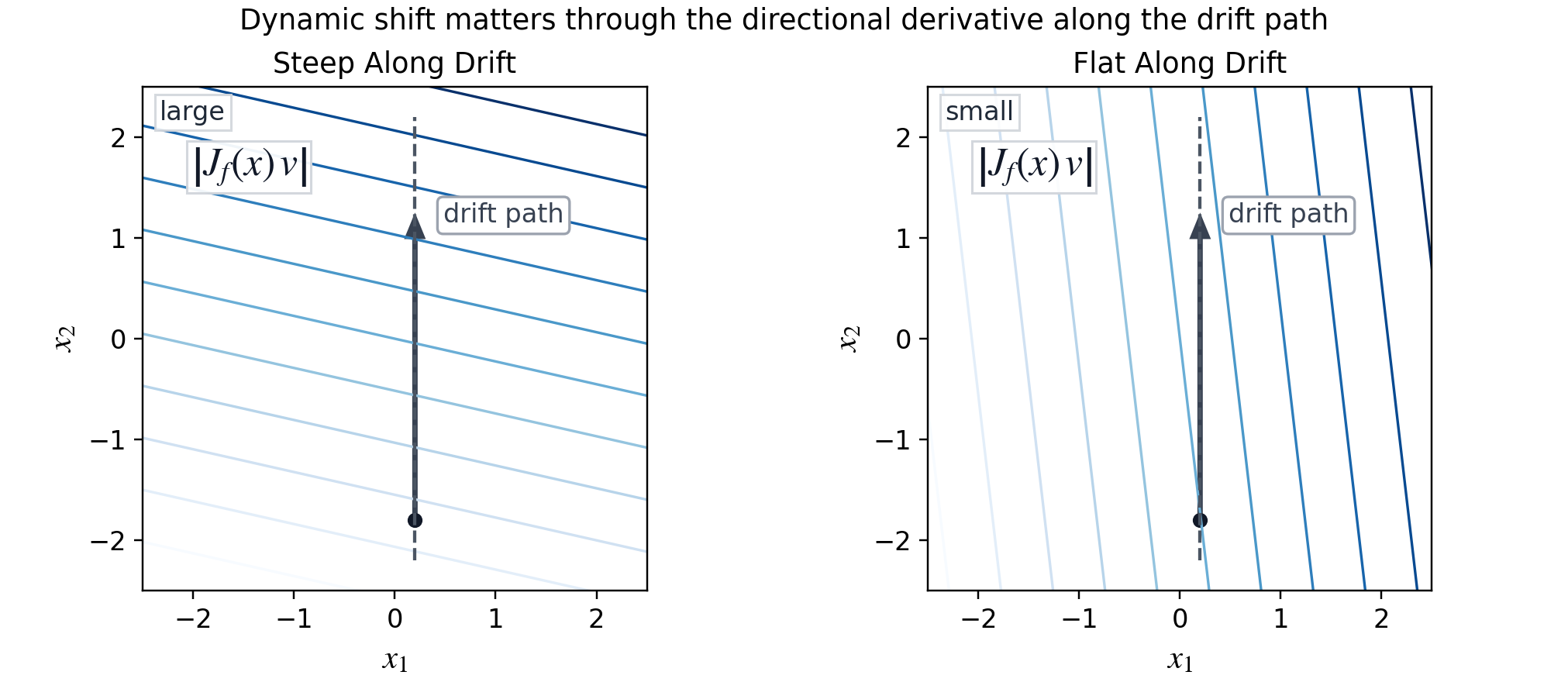
The central object is the Jacobian-velocity interaction \(J_f(X_t)\dot X_t\): environmental motion only becomes dangerous when it passes through directions where the model is locally steep.
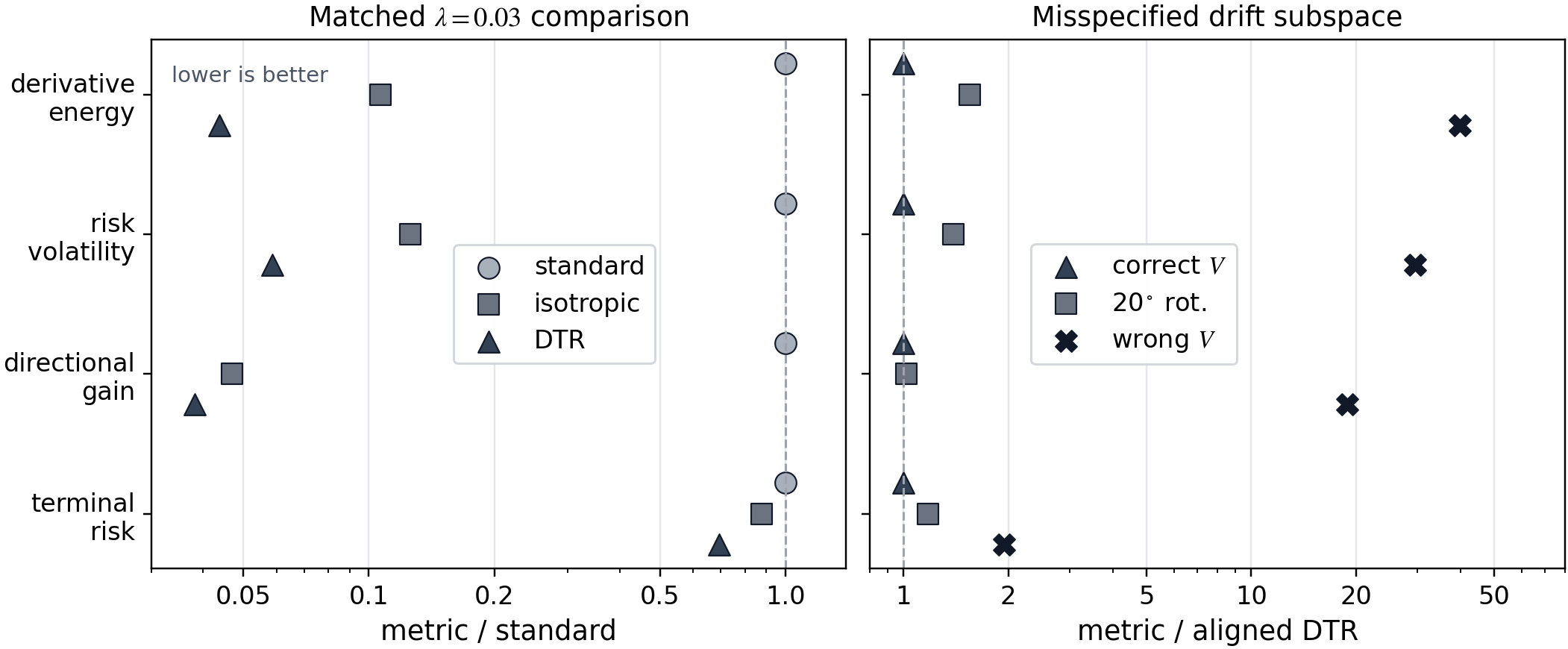
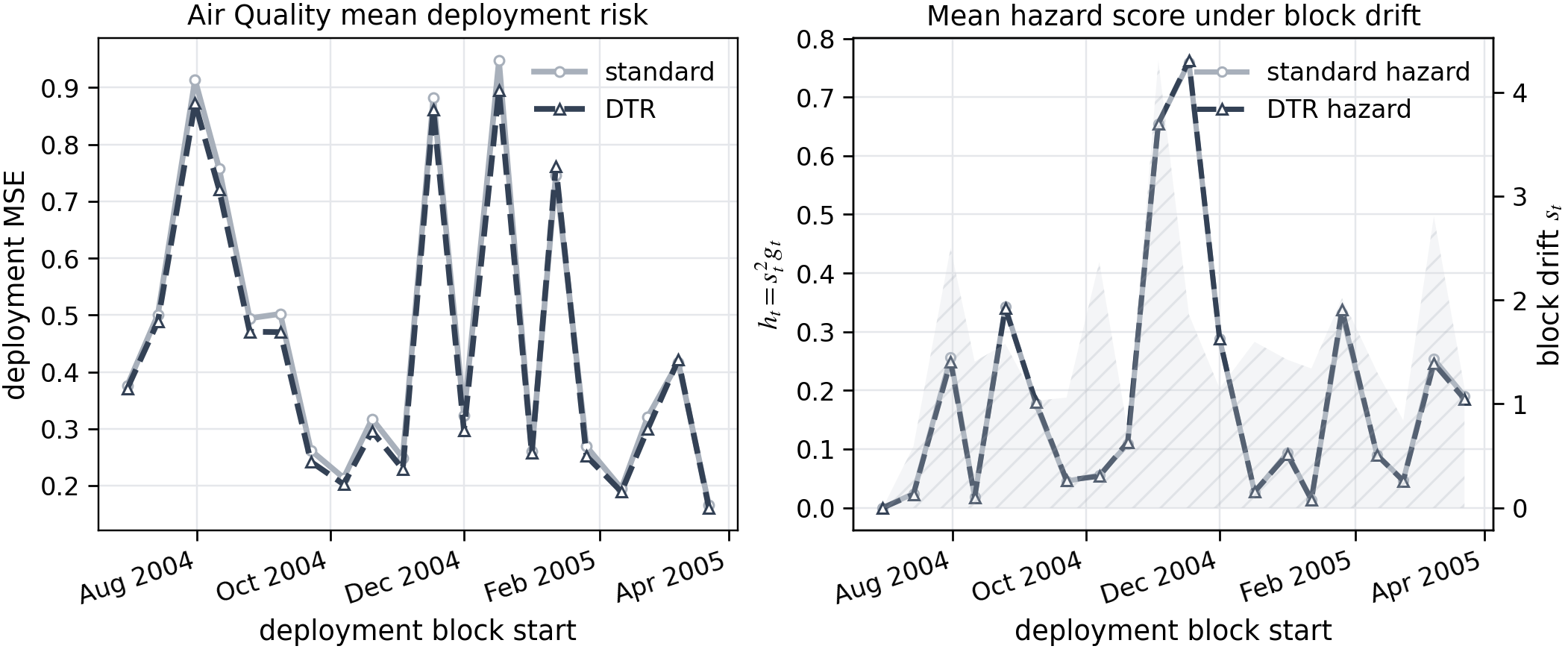
The practical implication is to concentrate robustness where deployment drift is expected to travel. When that estimated subspace may be incomplete, anisotropic DTR adds a weaker orthogonal guardrail instead of smoothing every direction equally. The same geometry also yields a matched monitoring signal.
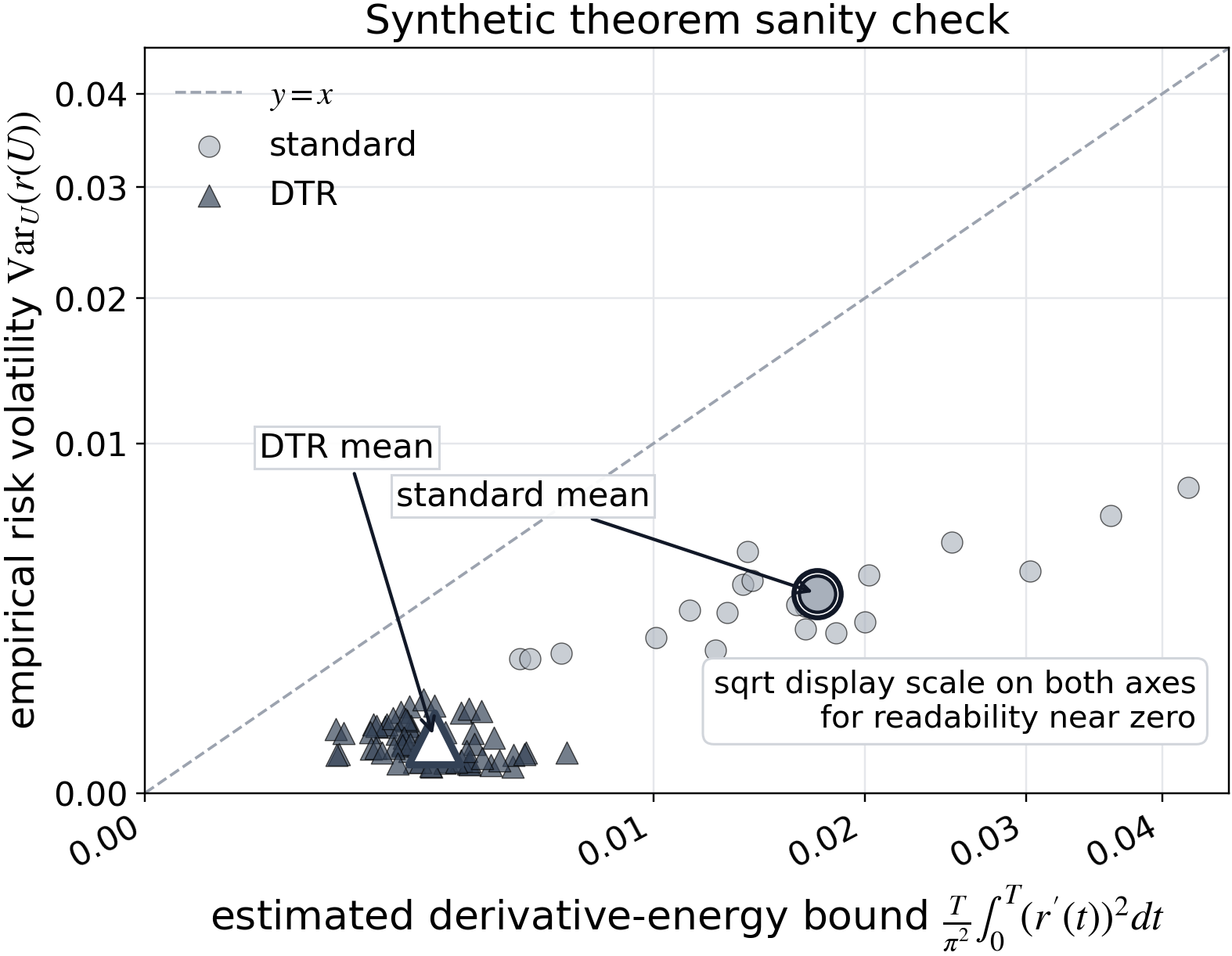
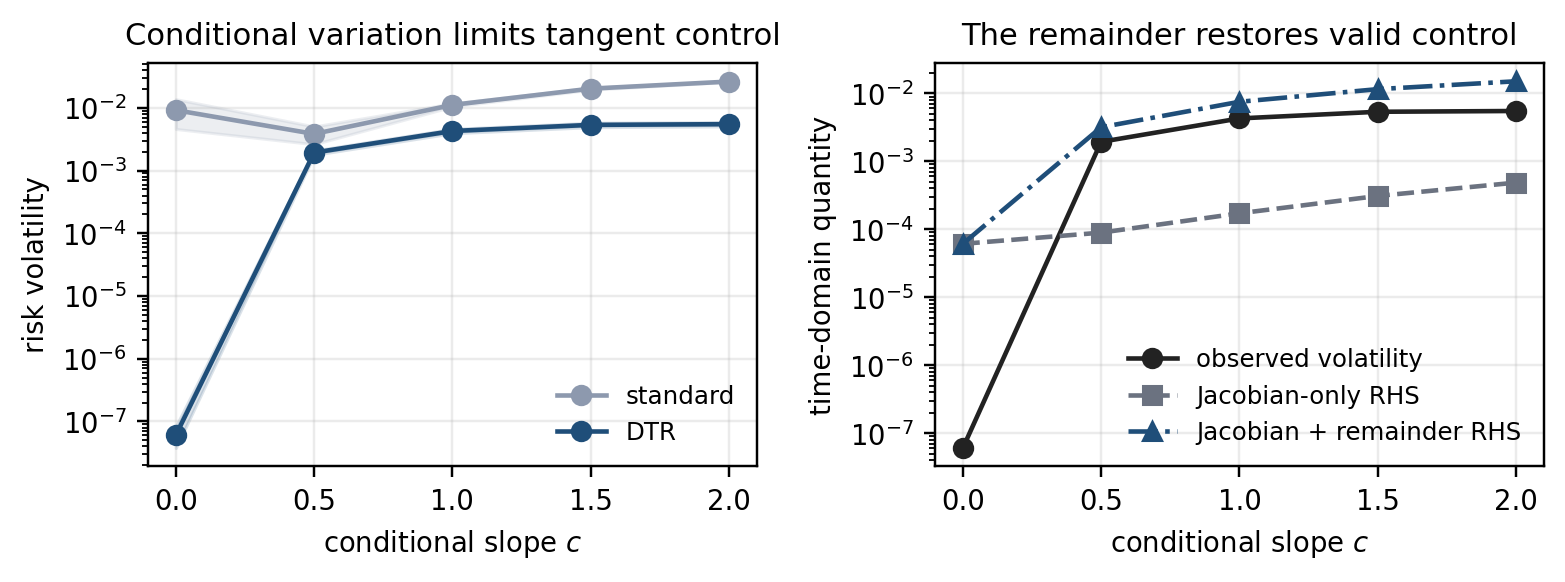
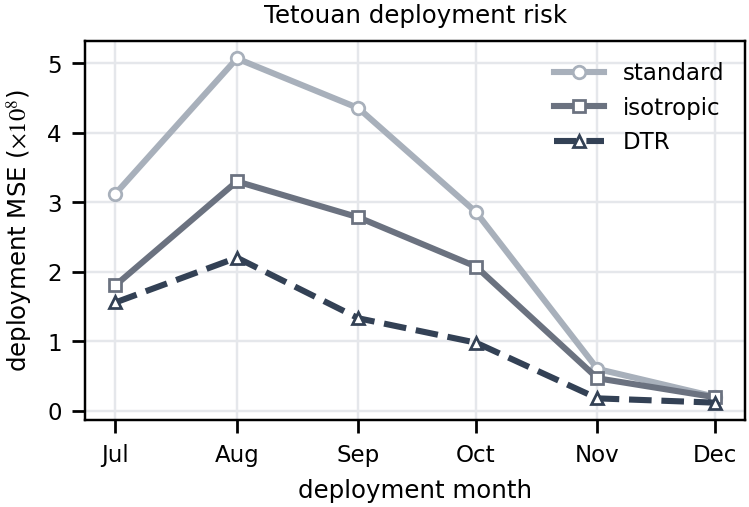
The empirical arc first verifies the time-domain bound, directional advantage, and conditional-risk remainder in controlled settings. The central field study then tests a strict predeployment drift basis on a 128-dimensional gas-sensor array, with Air Quality and Tetouan City power consumption providing complementary regression evidence.
In the rank-1 setting, a short bookkeeping proposition makes the monitoring proxy gap explicit: block averaging, residual drift, and angular misalignment determine how the hazard proxy departs from the leading low-rank term.
The repository also includes a dedicated proof-verification suite: symbolic identities, numerical stress tests, and cached-summary checks are collected into an HTML report that follows the same visual language as this site.